In this post
When the fridge is not cooling but the freezer is cold, the refrigerator is making cold and failing to deliver it. On most models one coil behind the freezer wall cools both sides, and a small fan pushes that air through a duct into the fresh-food section. A stopped fan, a duct packed with frost or a damper stuck shut leaves the freezer at 0°F while the fridge drifts past 40°F. Most of these are one-visit repairs.
The symptom is the same for half a dozen different failures. Nobody can tell which one from the kitchen, and ordering parts on a guess is how people pay for three parts to fix one problem. Start with the free checks. Then narrow it down.
How cold air gets from the freezer to the fridge
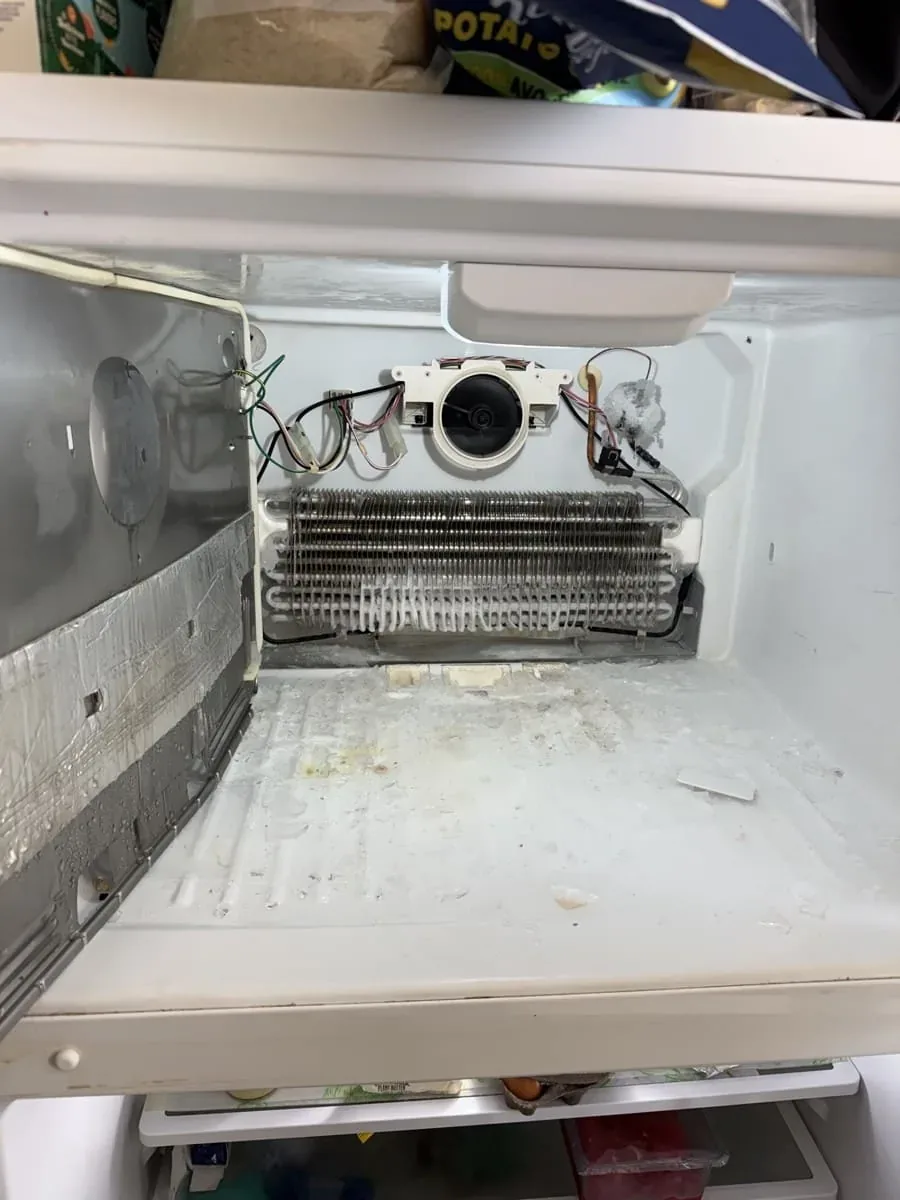
The evaporator coil sits behind the back panel of the freezer. The compressor makes it cold, and the evaporator fan blows air across it. Most of that air goes into the freezer. Some of it goes up a duct, through an air door called the damper, and out a vent into the fridge.
The fridge side has no cooling of its own on most refrigerators. It lives on borrowed air. Anything that slows that air down shows up in the fridge first, while the freezer, sitting right next to the coil, stays cold.
Some refrigerators are built differently. Many Samsung French-door models and a few others have a second coil and fan just for the fridge. On those, the fridge-side fan or its own defrost system is the first suspect. If you have one, our Samsung refrigerator page lists the error codes those models show.
Check these before you call anyone
If one of these fixes it, you don't need us.
- 1The fridge setting. Dials get bumped by a gallon of milk. Set the fridge to 37°F and the freezer to 0°F, then give it 24 hours to settle.
- 2The vents. Look at the back wall of the freezer and the top of the fridge for the air vents. A frozen pizza box or a bag of ice against one is enough to starve the fridge.
- 3The fridge door. Close it on a dollar bill. If the bill slides out with no pull, the gasket isn't sealing. Also check that a drawer or a bottle isn't holding the door open a quarter inch.
- 4The condenser coils. They're behind the bottom grille or on the back. Dusty coils make the whole system run warm, and the fridge side notices first. Vacuum them. A refrigerator in a Florida garage needs this more often than one in the kitchen.
- 5A recent move or install. A refrigerator that was just delivered or moved needs about a day to come down to temperature.
The evaporator fan stopped
This is the most direct cause. The coil is cold, but nothing moves the air.
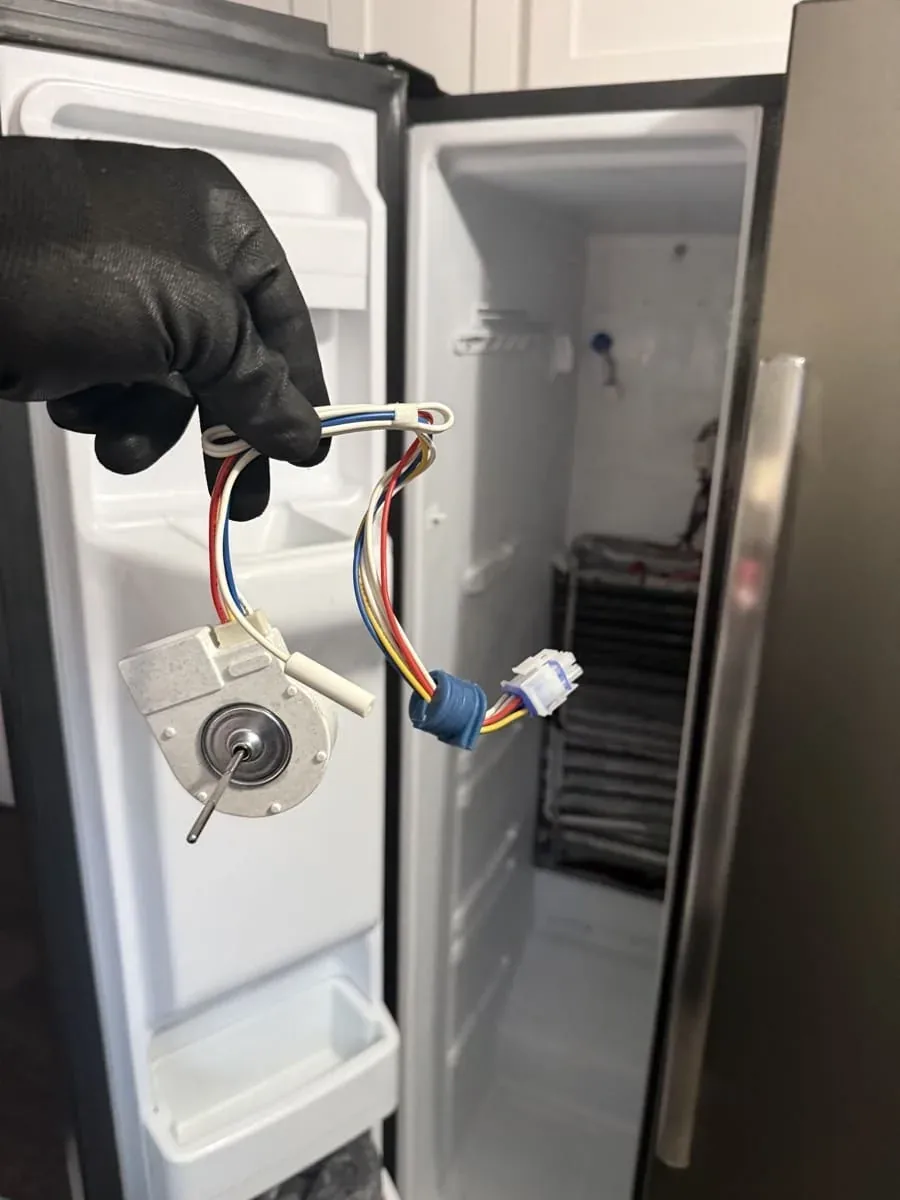
Open the freezer and listen while the compressor runs. You should hear a fan, and you should feel air coming out of the freezer vents. Many fans stop when the door opens, so press the door switch with your finger to fool it. No sound and no air point to the fan motor.
A fan that squeals, grinds or ticks is failing or hitting ice. Ticking that comes and goes usually means frost has grown into the blades, which sends you to the next section.
The fan motor is behind the same back panel as the coil. Replacing it is a short job once the panel is off.
Frost has blocked the coil
This is the most common reason we find. A refrigerator melts the frost off its coil several times a day. A heater warms the coil for a few minutes, a defrost thermostat or sensor tells it when to stop, and the control board or a timer runs the schedule.
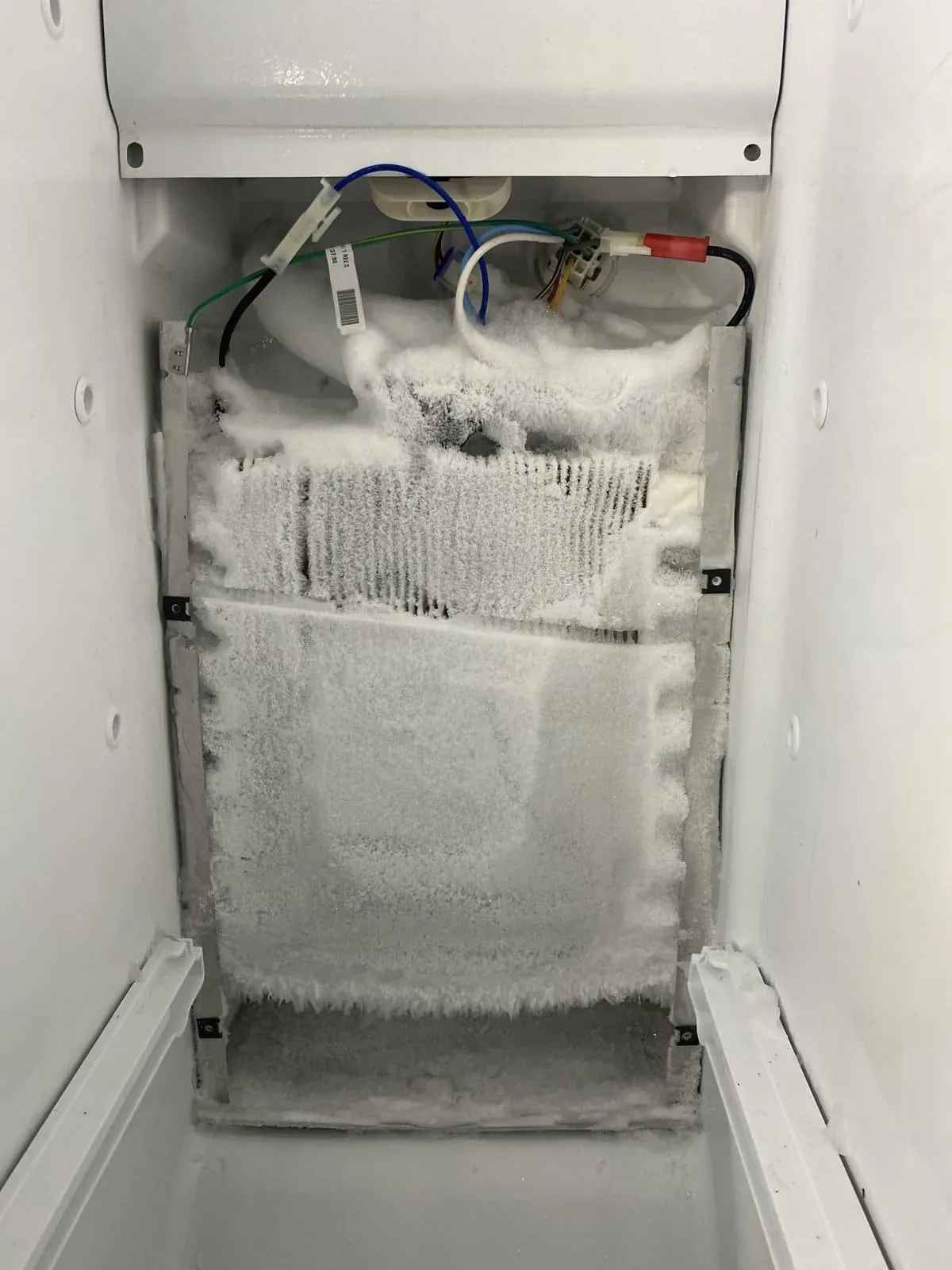
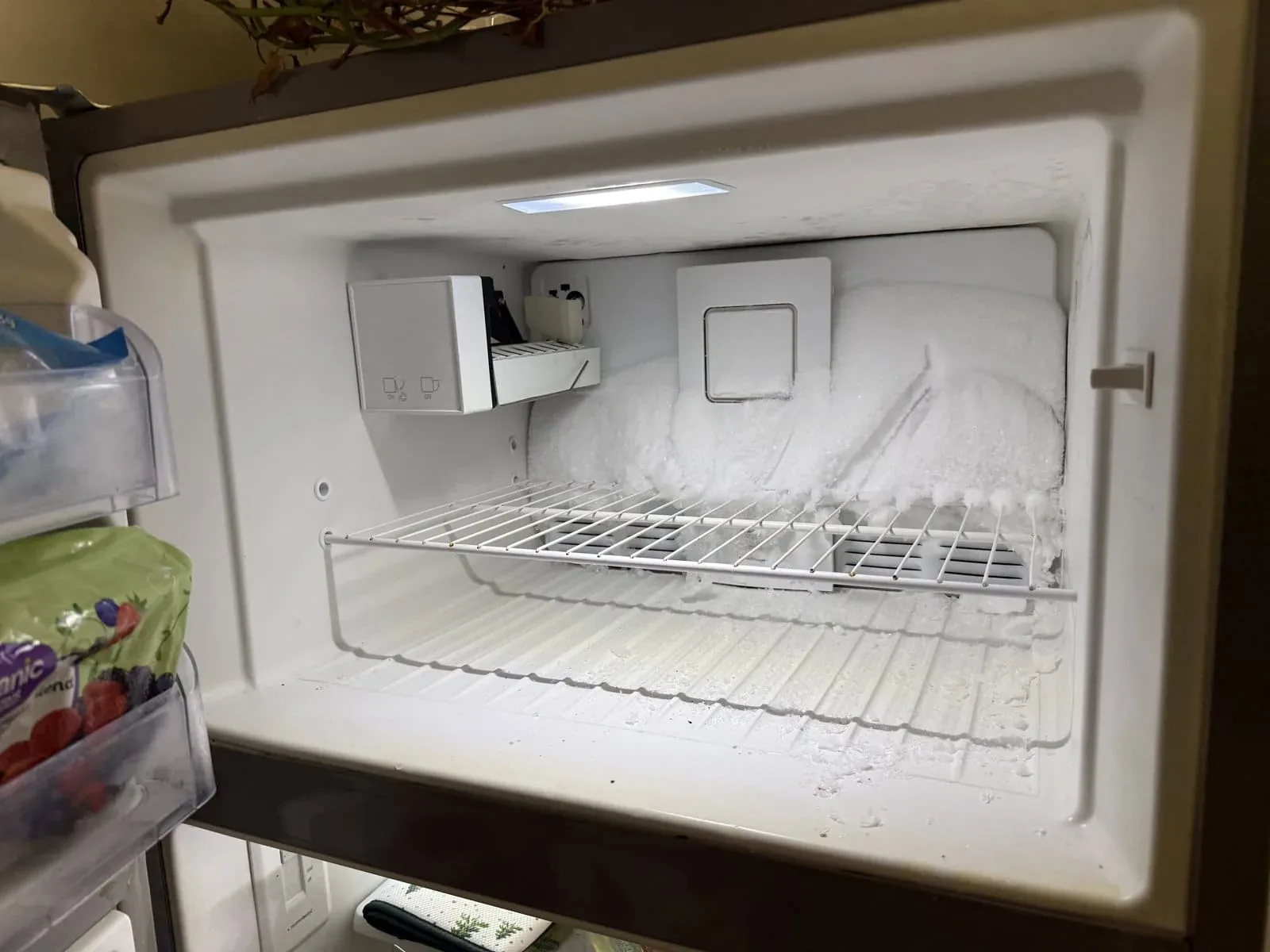
When any of those parts fails, frost keeps building. It fills the gaps in the coil, then the duct to the fridge. The freezer stays cold because it's touching the ice. The fridge warms slowly, over days.
Signs it's a defrost problem:
- Snow or a frost pattern on the freezer's back panel
- Water dripping or ice forming under the fridge drawers
- The fridge got warm gradually, not overnight
- Ticking from the freezer fan hitting ice
Florida adds to it. Every time the door opens, humid air comes in and turns into frost on the coil. A defrost system that's barely keeping up in December falls behind in August.
You can test it yourself. Move the food to a cooler, unplug the refrigerator, prop the doors open and put towels down. Give it 24 hours to melt. If it cools normally for a few days and then the fridge warms again, the defrost system is the cause. It's a test, not a repair. The ice comes back.
The damper is stuck closed
The damper is the air door between the freezer and the fridge. On most newer refrigerators a small motor opens and closes it as the fridge asks for cold. Older ones use a dial that moves a baffle.
If the fan runs, the freezer vents blow cold, but almost nothing comes out of the vent in the fridge, the damper is the likely suspect. It can freeze shut or its motor can fail. On some models you can hear it click when you change the fridge setting. Silence after a big setting change is a clue.
A sensor or the control board
The fridge has a temperature sensor that tells the control board how warm it is. A sensor that reads cold when the fridge is warm means the board never asks for air. Boards also fail on their own, and some models show an error code when they do. Write down any code on the display before you call.
This is less common than a fan, frost or a damper, so it gets tested after them.
When it's not the airflow
Check the freezer with a thermometer. If it's at 0°F, the problem is delivery, and everything above applies.
If the freezer is only cool, 10°F to 20°F, the problem is bigger. The system isn't making enough cold in the first place. That points at the condenser fan, a refrigerant leak or the compressor, and the fridge side is just the first place it showed up. Our refrigerator repair page covers those, and the diagnostic is what tells you whether that repair is worth doing.
Your food while you wait
The FDA's guidance is to keep the fridge at 40°F or below. Perishables such as meat, milk and leftovers that sit above 40°F for more than two hours should be thrown out.
Put a thermometer in the fridge so you know the real number. Move the risky food into the freezer or a cooler with ice. Keep both doors closed as much as you can. In a power outage, the FDA says a closed fridge holds food safely for about four hours, and a full freezer for about 48. A summary is on the FDA's outage page.
What happens when we come out
The diagnostic is $89. We find which of these it is, write down the exact price, and you decide. If you go ahead, the $89 comes off the repair. The technician brings the parts that most often fail on your model, so fans, defrost parts and sensors are usually fixed on the first visit.
If the refrigerator is still under the manufacturer's warranty, call the manufacturer first. Their repair is free.
We cover Pasco, Hillsborough and Pinellas, from New Port Richey to Clearwater. Call (727) 425-2707, 8 AM to 6 PM, seven days a week.
Alex
Writes for Fix Now Appliance, a family-owned appliance repair company in Tampa Bay. Questions about this post? Call (727) 425-2707.